Comic Book Price Value Scanner
petraappsComics
4.549.00 Reviews
- Version
- 1.0.13
- Installs
- 10.00K
- Age Rating
- Everyone
Screenshots
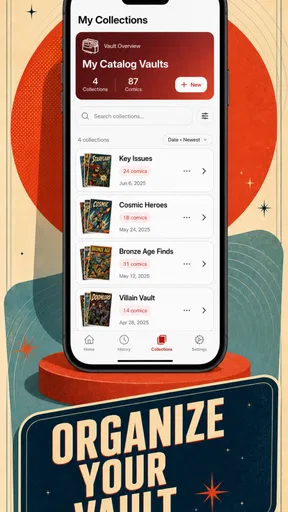
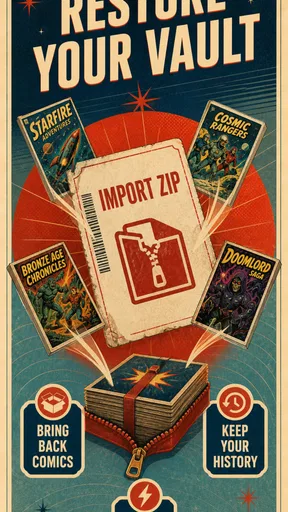

Our Review of Comic Book Price Value Scanner
 Analysis by Appyee
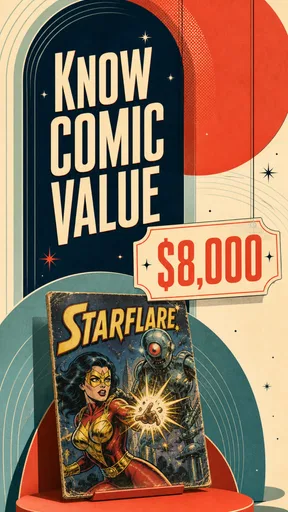
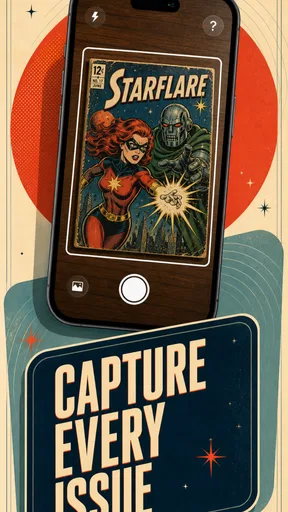
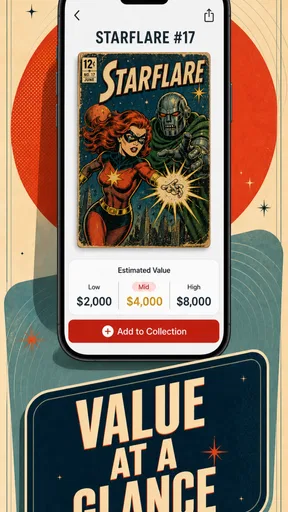
I tried Comic Book Price Value Scanner as a practical tool for a household collection rather than as a simple novelty scanner. The idea is straightforward: point the phone at a comic cover, let the app identify it, check its current value, and keep the result connected to your collection. In everyday use, that combination is more useful than a bare price lookup because it joins recognition, valuation, and organization in one place.
That focus makes this a very specific kind of comics app. It is not mainly for reading digital issues, discovering new series, or discussing stories with other fans. It is for the moment when you have a box, shelf, or inherited stack of physical comics and want to understand what is actually there. I found that distinction important before using it, because the app makes the most sense when you already own comics or regularly handle them.
Developed by petraapps, it is a free app in the Comics category, with optional in-app purchases ranging from $5.49 to $69.99 per item. It is rated for Everyone, runs on Android 7.0 and newer, and its current version is 1.0.5. The app has an average rating of 4.2 from around 383 ratings, with over 10K installs, so it has attracted a modest but noticeable audience without feeling like a huge mainstream platform.
How it works when several people share a comic collection
The most convincing use case for me was a shared household collection. Imagine finding a long-neglected box in a closet while one person in the home remembers buying the comics and another person wants to sort them. Instead of passing the box around with several different price guides, one phone can become the working tool. One person handles the issues, another holds the device steady, and the household gradually builds a clearer picture of what it owns.
That arrangement also exposes the app’s real strength: it can make an unstructured pile feel manageable. Scanning a cover gives you a starting point for identification, while the value view helps decide which issues deserve closer inspection. The collection function then gives the household a reason not to repeat the same work later. I would use it during a weekend sorting session, especially when the goal is to separate everyday reading copies from comics worth storing more carefully.
There is a useful division of labor here. A collector can do the scanning, while someone less familiar with comics can place issues into groups or note which ones have already been checked. This lowers the knowledge barrier for relatives who cannot recognize publishers, characters, or series by sight. The app does not replace an experienced collector’s judgment, but it can give everyone a common starting point.
I would not treat the first result as a final verdict on a comic’s worth. A cover scan is excellent for narrowing down what an issue might be, but physical condition, edition details, printing differences, missing inserts, and restoration can affect a real sale. My practical rule is to use the app for triage: identify the likely issue, record it, and then inspect valuable-looking copies more carefully before making any decision.
Starting a collection without losing track of ownership
On a shared device, the first boundary to establish is whose collection is being recorded. A household may have one person’s personal comics, jointly owned boxes, and items that belong to a child or relative. Since the app is centered on managing a collection, I would decide that structure before scanning hundreds of covers. Otherwise, the list can become accurate but confusing, especially when someone later wants to sell, donate, or move only part of it.
This is not a reason to avoid the app; it is a reason to use a simple household routine. Choose one person to maintain the main collection, and agree on a naming or grouping habit that distinguishes personal stacks from shared ones. If the phone is passed between users, say out loud when a batch is complete and when a new owner’s comics are being added. That small step prevents the most common shared-device problem: nobody knows whether an entry represents ownership or merely temporary possession.
I also recommend scanning in small batches instead of attacking an entire room at once. A short session makes it easier to catch a misidentified cover while the physical comic is still in your hand. It also gives younger or less experienced family members a manageable role, such as preparing the next group of issues while the more knowledgeable user checks the results.
The app’s free entry point makes this kind of trial easy. You can begin with a single box and decide whether its workflow suits your household before committing to optional purchases. The purchase range is broad, so I would look carefully at what each paid item provides and whether it solves a real problem for your collection. For occasional sorting, the free experience may be enough; for a serious cataloging project, the value depends on how much time the paid options save.
What to do when the scanner needs help
Cover recognition is naturally sensitive to the way a comic is presented. Glare, plastic bags, bent covers, unusual layouts, and overlapping objects can all make a scan less straightforward. I found it best to treat the phone camera like a document tool: flatten the comic as much as is safe, avoid reflections, and keep the whole cover visible. A few seconds spent preparing the shot is usually better than repeatedly accepting an uncertain match.
For older or unusual comics, I would compare the app’s identification with the issue number and visible cover details before saving it. This is one of the most important non-obvious habits with a scanner-based catalog. A plausible title is not necessarily the exact edition in your hand. If the collection is being used for insurance records, inheritance planning, or a possible sale, manually checking the printed details remains worthwhile.
Real-time values are helpful for prioritizing attention, but they should be read as changing estimates rather than permanent labels. Market interest can move, and condition often makes a larger difference than a casual scan suggests. I would use the value display to answer questions such as “Which box should I inspect first?” or “Is this stack worth researching further?” I would not use it alone to promise a selling price to another family member.
That distinction is particularly important when several people share financial expectations. One person may see a high figure and assume the household has found a windfall, while another knows the issue has torn pages or a damaged spine. The app is most trustworthy as an organizing and research aid when its value result is treated as a prompt for inspection, not as an appraisal certificate.
Keeping household work coordinated
Comic sorting often fails because the work is repetitive, not because the tools are complicated. A shared scanner can improve coordination if everyone follows the same sequence: identify the comic, review the result, add it to the correct collection area, and return the physical issue to a clearly marked pile. Without that final physical step, a carefully recorded digital collection can still leave the real comics scattered.
I would create three temporary groups during a sorting session: items awaiting a closer look, items already recorded, and items that need a second attempt. The app’s collection function is useful for the recorded group, while the physical piles handle uncertainty. This workflow avoids forcing a questionable scan into the permanent catalog just to keep the session moving.
Another helpful habit is to photograph or scan one person’s comics in a continuous session rather than mixing everyone’s issues together. Even without assuming any special family-account feature, this creates a clear mental boundary. When the phone changes hands, the next user knows exactly where their batch begins. It also makes it easier to review mistakes because the surrounding issues belong to the same owner or box.
For a household sale, the app can help create a preliminary inventory before anyone contacts a buyer. That saves time and gives the family a shared list to discuss. Still, I would separate “identified” from “ready to sell.” The first means the app recognized a likely comic; the second requires checking condition, edition, completeness, and local buyer expectations.
Age rating, trust, and handing over the phone
The Everyone content rating makes the app comfortable to introduce in a mixed-age home, especially when a child is interested in comics and wants to help with scanning. I would let a younger user handle safe, low-value issues and learn how cover identification works. Valuable or fragile comics should remain with an adult, not because the app is difficult, but because the physical collection may need careful handling.
Trust matters more than age in this situation. A child may be perfectly capable of pointing the camera at a cover, yet still not understand why a result should be checked before it is saved or why a high displayed value does not mean cash in hand. I would explain those limits plainly. The app can support learning about collecting, but it should not be used to let a child make unsupervised decisions about selling or assigning ownership.
On a shared phone, I would also avoid assuming that every household member wants the same information mixed together. Personal collections, gifts, and inherited comics can carry emotional or financial significance. A clear agreement about who maintains the list is more useful than pretending one catalog automatically represents everyone’s property. The app helps with coordination, but the household still needs its own boundaries.
Because the app is free to install but includes optional purchases, an adult should handle any decision involving paid items. This is especially sensible when the device is used by children or guests. Before buying, I would check whether the intended use is frequent enough to justify the cost and whether the feature supports the actual collection workflow rather than merely adding convenience.
Where it beats ordinary alternatives—and where it does not
The usual alternative is a combination of a general web search, a printed price guide, a camera app, and a spreadsheet. That approach can be more flexible, but it also creates a lot of copying and repeated decisions. Comic Book Price Value Scanner is more convenient when the job begins with a physical cover and ends with a personal inventory. The path from recognition to collection management is its clearest advantage.
A spreadsheet may still be better for a household that needs custom ownership fields, detailed purchase history, insurance notes, or a carefully controlled sales ledger. A specialist collector may also prefer a dedicated database with deeper issue-level metadata and grading workflows. I would choose the scanner app for speed and accessibility, then move to a more elaborate system only if the collection becomes serious enough to demand it.
It is also not the right choice for someone mainly looking for digital comic reading or social discovery. Its value comes from handling physical comics and making sense of them. If your interest is reading stories rather than cataloging issues, the scanning and valuation focus will feel like extra work rather than a benefit.
The same applies to casual users who own only a few comics and never need to track them. In that case, a one-off web search may be faster. The app becomes more compelling when you have enough issues to forget what you own, enough uncertainty to need identification help, or enough shared activity that a central collection saves repeated conversations.
My household verdict after using it
I see Comic Book Price Value Scanner as a practical first layer for comic organization. It is approachable enough for a mixed household, focused enough to make a box-sorting session productive, and more useful than a simple scanner because it connects identification with current value checks and collection management. The strongest result is not a single price; it is a clearer inventory that several people can work from.
My advice is to begin with one representative batch. Test how well the covers in your collection are recognized, decide who will maintain the catalog, and keep uncertain matches separate until they can be checked. That small trial will reveal whether the app fits your comics better than a spreadsheet or manual search without creating a large cleanup job.
I would recommend it to new collectors, families sorting inherited boxes, and anyone who wants a quick way to prioritize which comics deserve closer attention. I would be more cautious for professional valuation, highly specialized collections, or households needing detailed ownership and grading records. In those cases, the app can still be a useful scanning assistant, but it should not be the only system.
Overall, the app earns its place when physical comics are shared, numerous, and easy to lose track of. Its real strength is turning a scattered household sorting task into a repeatable workflow, while its main limitation is that recognition and market value still need human judgment. Used with those boundaries in mind, it is a sensible free starting point for bringing order to a real-world comic collection.
Privacy and Permissions
See what permissions an app requests and how it handles your data.
- Photos/Media/Files
- read the contents of your USB storage, modify or delete the contents of your USB storage
- Storage
- read the contents of your USB storage, modify or delete the contents of your USB storage
- Camera
- take pictures and videos
- Microphone
- record audio
- Other
- view network connections, full network access, prevent device from sleeping, Google Play license check
Verdict
Strengths of Comic Book Price Value Scanner
- Quickly scans comic barcodes to provide estimated market values.
- Useful for checking collections before selling or trading comics.
- Helps identify issues and compare prices while browsing shops.
- Simple interface makes it accessible for casual collectors.
- Can save time compared with researching each comic manually.
Limitations of Comic Book Price Value Scanner
- Values may be outdated or differ from actual sale prices.
- Barcode recognition can fail on damaged or poorly printed issues.
- Rare or independent comics may have limited database coverage.
- Some useful features may require a subscription or in-app purchase.
- Requires internet access for scans, pricing data, and comic details.
Similar Picks in This Category
View All
WEBTOON: Manga, Comics, Manhwa
NAVER WEBTOON4.6

MangaToon: Comic & Manga
MangaToon4.3

네이버 웹툰 - Naver Webtoon
NAVER WEBTOON4.3

Tapas – Comics and Novels
Tapas Entertainment Inc.4.2

Lezhin Comics - Daily Releases
LEZHIN ENTERTAINMENT3.3

WebComics - Webtoon & Manga
WEBCOMICS HOLDINGS HK LIMITED4.4
Frequently Asked Questions
What is Comic Book Price Value Scanner used for?
Comic Book Price Value Scanner is designed to help collectors identify comic books and estimate their potential market value. After scanning or entering information from an issue, the app can provide details such as title, issue number, publication data, and pricing references. It is useful for organizing a collection, researching possible purchases, or getting a quick idea of what a comic may be worth.
How accurate are the comic book values shown by the app?
The values shown by Comic Book Price Value Scanner should be treated as estimates rather than guaranteed selling prices. Comic book prices can change according to condition, edition, printing, signatures, restoration, demand, and current marketplace activity. The app may provide a helpful reference point, but serious collectors should compare the result with recent auction sales, dealer listings, grading standards, and professional evaluations.
Can the app identify every comic book by scanning its cover?
The scanning feature can make identification faster, especially for recognizable issues with clear cover artwork and readable details. However, it may not correctly identify every comic, particularly limited editions, variants, older publications, foreign releases, damaged covers, or images with poor lighting. Users should always check the detected title, issue number, publisher, and year before relying on the displayed information.
Does Comic Book Price Value Scanner support comic collections and personal inventory?
The app may be useful for building a personal record of comics by saving identified issues and reviewing their estimated values in one place. Collection features can help users track what they own, notice duplicates, and organize a large library more efficiently. Before downloading, check the current app description to confirm whether cloud synchronization, export tools, account login, or backup options are available on your device.
Is Comic Book Price Value Scanner free to download, and are there in-app purchases?
Availability, pricing, advertisements, and premium features can vary between the Android and iOS versions. Some functions may be accessible for free, while advanced scanning, unlimited searches, collection management, or detailed pricing information could require a subscription or one-time purchase. Review the store listing carefully before installing, especially the trial terms, renewal conditions, and permissions requested by the application.
